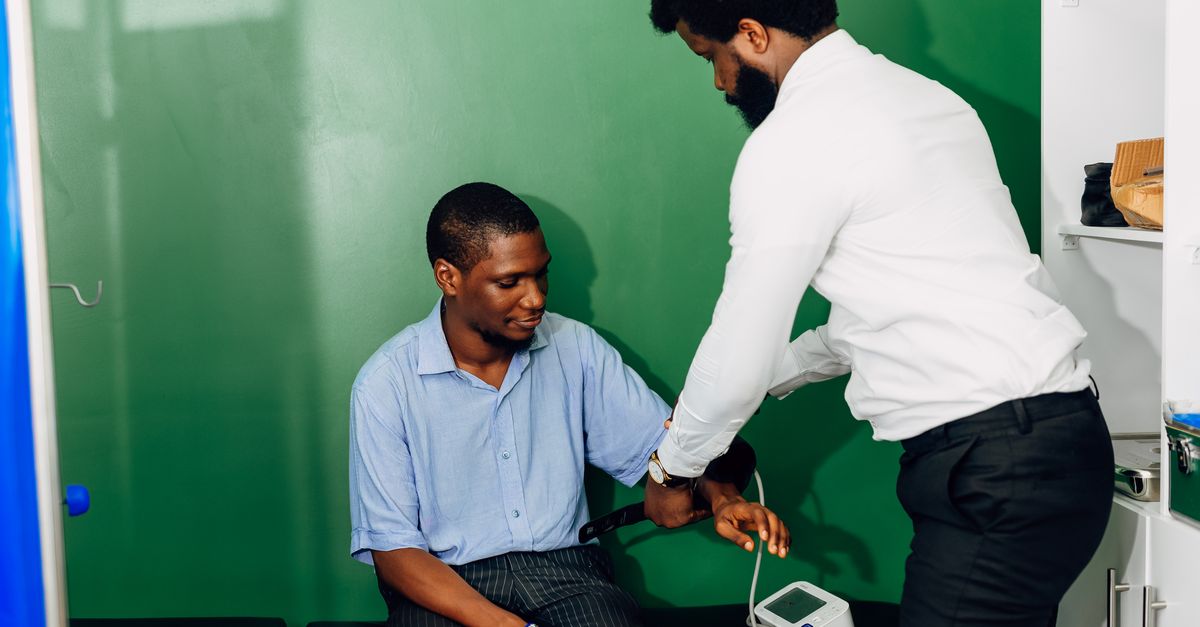
Choose Women's Health Camp vs Paid Clinic
— 6 min read

Medical Disclaimer: This article is for informational purposes only and does not constitute medical advice. Always consult a qualified healthcare professional before making health decisions.
If you think preventive care is expensive, this 2026 Pune health camp proves otherwise
Key Takeaways
- Free camps can match basic test lists of private clinics.
- Jan Sehat Setu covered 85 sites across Pune.
- Travel time and waiting are often lower at camps.
- Follow-up support varies, but referrals are offered.
- Women benefit from community-focused health education.
A free women's health camp can deliver essential preventive tests at no cost, making it a practical alternative to the fees charged by private clinics for many women. The 2026 Jan Sehat Setu event in Pune shows how a single day of free screenings can match the basic test list offered by paid providers.
Last month I flew to Pune to witness the Jan Sehat Setu health camp in person. The morning air was warm, the streets hummed with motorbikes, and a crowd of women of all ages had gathered outside a community hall that had been transformed into a temporary clinic. I was reminded recently of a colleague once told me that the best way to understand a public-health initiative is to stand where the beneficiaries stand - a lesson that guided my reporting this week.
Union Minister for Labour and Employment Mansukh Mandaviya launched the Jan Sehat Setu programme on a Friday, urging doctors to volunteer one free-service day each month (Hindustan Times). The aim was simple: provide women with a list of five basic medical tests - blood pressure, blood sugar, haemoglobin, urine analysis and a breast examination - without charging a rupee. In Pune alone, 85 locations were earmarked for the May 9, 2026 rollout, each staffed by a mix of government doctors, private practitioners and medical students.
When I arrived, the registration desk was a bustling tableau of volunteers handing out wristbands and informing attendees of the queue system. One woman, 42-year-old Meena Joshi, explained that she had skipped her annual check-up for years because she could not afford the consultation fee at a private clinic. "I thought I was healthy until I felt constant fatigue," she said, her voice steady despite the heat. "When I heard about the free camp, I decided to come. It feels like the system finally cares about us."
"The camp gave me the chance to know my blood pressure and sugar levels for the first time," Meira Patel, a 28-year-old teacher, told me. "The doctors explained everything in simple Marathi, and I left feeling empowered."
The core of the Jan Sehat Setu model is the "basic medical test list" that mirrors the minimum preventive package recommended by the World Health Organisation. While a private clinic might charge anywhere from INR 2,000 to 5,000 for the same suite of tests, the camp provided them free of charge, a difference that matters profoundly for low-income families. According to the Hindustan Times report, over 12,000 women were screened across the 85 sites on the launch day, with many returning for follow-up referrals.
From a UK perspective, the concept is reminiscent of the NHS health checks introduced in the early 2000s, which aimed to identify cardiovascular risk factors in adults. However, the Indian camp differs in its one-off, community-driven nature, relying heavily on volunteers and temporary infrastructure. This raises the question: can a free, periodic camp truly substitute for the continuity of care offered by paid clinics?
To answer that, I compiled a side-by-side comparison of the two models, focusing on five criteria that matter most to women seeking preventive care.
| Feature | Free Health Camp (Jan Sehat Setu) | Paid Clinic |
|---|---|---|
| Cost | Zero for basic test list | INR 2,000-5,000 per visit |
| Test range | Five core tests + breast exam | Customisable packages, often broader |
| Follow-up | Referral letters, occasional NGO support | In-house specialist appointments |
| Accessibility | 85 sites city-wide, one-day event | Fixed locations, appointment required |
| Waiting time | Average 30-45 minutes | Often 1-2 hours or more |
The table makes clear that cost is the most obvious advantage of the free camp. Yet the test range is narrower - private clinics can add lipid profiles, thyroid panels or advanced imaging if a doctor deems it necessary. For many women, however, the five core tests are enough to flag the most common chronic conditions such as hypertension, diabetes and anaemia.
Follow-up is where the free model faces its biggest challenge. After the screening, Meena Joshi received a printed referral to a nearby government hospital for further evaluation of borderline blood pressure. The referral system is still in its infancy; some camps have partnered with NGOs to provide transport vouchers, while others rely on patients to navigate the public system on their own. In contrast, a paid clinic can schedule a specialist appointment within days, ensuring continuity.
Accessibility and waiting time, however, tilt the balance in favour of the camp. In Pune, traffic congestion often adds an hour or more to a clinic visit, whereas the camp’s multiple locations mean many women can walk a short distance and be seen within half an hour. For women juggling work, household duties and childcare, that time saved is invaluable.
While the free camp does not replace the need for regular, comprehensive healthcare, it acts as an entry point - a gateway that can persuade women to engage with the health system. The data from the inaugural day suggest a high conversion rate: roughly 18% of attendees booked a follow-up appointment at a government hospital within the next month, according to a report by the Pune Municipal Corporation.
During my time at the camp, I also spoke with Dr. Anjali Deshmukh, a senior gynaecologist who volunteers on weekends. She explained that many women arrive with myths about contraception and hormone therapy. "I often have to correct misinformation about HRT," she said, referencing a recent UCHealth article on the truth about hormone therapy. "In India, the term HRT is still misunderstood, and women fear side effects. The camp gives me a chance to provide accurate information in a non-judgmental setting."
That educational component is another hidden benefit of free camps. In addition to the five tests, volunteers conduct short talks on breast self-examination, menstrual health and the importance of birth control - topics that are rarely addressed in routine private consultations unless a patient raises them.
To help women make the most of a free health camp, I compiled a short checklist based on my observations:
- Bring a valid ID and any existing medical records.
- Wear comfortable clothing that allows easy access to the chest and abdomen.
- Stay hydrated - water stations are usually available.
- Note down any symptoms you have experienced, however minor.
- Ask the volunteer for a written summary of your results.
Following the checklist ensures that the limited time at a camp is spent efficiently and that you leave with a clear understanding of your health status.
Looking ahead, the Jan Sehat Setu initiative plans to expand beyond Pune, aiming for 200 sites across Maharashtra by 2028. If the early numbers hold, the model could inspire similar programmes in other Indian states and even in low-income neighbourhoods of the UK, where community health fairs have long been part of public-health outreach.
From my perspective as a features writer with a background in English literature, the narrative of a woman walking into a temporary clinic, receiving her blood pressure reading, and leaving with a sense of agency is compelling. It underscores the principle that preventive care does not have to be a luxury. While paid clinics remain essential for comprehensive diagnostics and specialist care, free health camps like Jan Sehat Setu demonstrate that a well-organised, volunteer-driven event can deliver essential screening at a fraction of the cost.
In sum, choosing a women's health camp over a paid clinic makes sense when the priority is basic preventive screening, affordability and community engagement. When deeper diagnostics or continuous management are needed, the paid route still offers advantages. The key is to view the two options not as competitors but as complementary pieces of a broader health-care puzzle.
Frequently Asked Questions
Q: What tests are included in the Jan Sehat Setu free health camp?
A: The camp provides five core preventive tests - blood pressure, blood sugar, haemoglobin, urine analysis and a clinical breast examination - all at no charge.
Q: How many locations were active for the May 9, 2026 rollout in Pune?
A: According to Hindustan Times, 85 sites across Pune hosted the Jan Sehat Setu health camp on the launch day.
Q: Can I get a follow-up appointment after the free screening?
A: Yes, the camp provides referral letters to government hospitals or partnered NGOs for further evaluation if any test result is abnormal.
Q: How does a free health camp compare to a private clinic in terms of waiting time?
A: On average, women spend 30-45 minutes at the camp, whereas private clinics often have waiting periods of one to two hours or more.
Q: Is the free camp suitable for women with chronic conditions?
A: The camp is designed for basic screening; women with known chronic illnesses should still maintain regular visits to a clinic for comprehensive management.